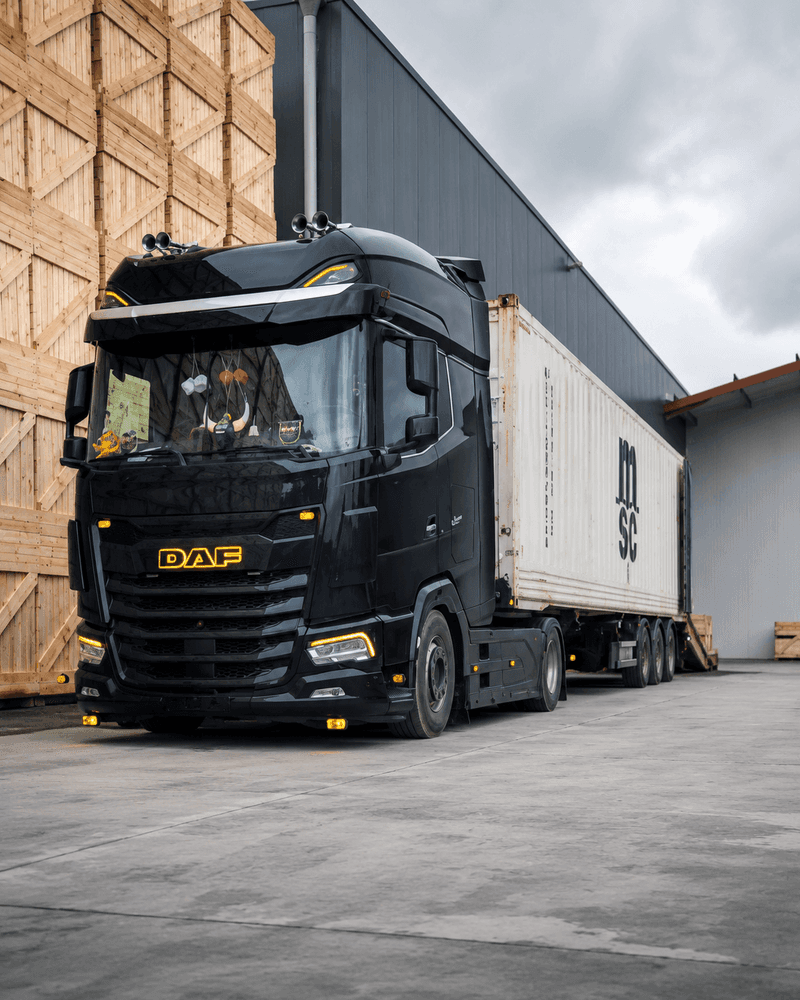
Reefer transport moves temperature-sensitive cargo in a refrigerated container that stays cooled throughout the journey. We arrange it with a genset, so the container holds its temperature even without shore power, to and from Antwerp and across Europe. You give us the temperature, and we set the container correctly at departure.
What is reefer transport with a genset?
A reefer, or refrigerated container, is a container with its own cooling unit. That unit holds the cargo at a set temperature, the setpoint. Chilled products usually sit between 0 and +15°C, frozen cargo between −18 and −25°C.
The cooling unit needs power. At a terminal or on board a vessel, the container draws it from a fixed connection. On the road, there is no socket. That is where the genset comes in: a diesel generator attached to the container that keeps the cooling running for the whole trip.
One thing matters here: a reefer holds cargo at temperature, it does not cool it down. In the trade, people say a reefer is a hotel, not a hospital. Load warm cargo and the unit will not bring it back to the setpoint. Your cargo must already be at the right temperature before it goes into the container.
Why is driving without a genset a gamble?
Some carriers run a reefer without a genset and bet on mild outside temperatures. While it stays cool, it often works. When it gets hot, it goes wrong.
A closed container in full sun heats up fast. The temperature inside climbs well above the outside temperature. Without active cooling, your cargo sits in that heat for hours.
Take chocolate. Move it at 30°C without cooling and it melts. The shipment is lost and has to be made again. The extra cost of a genset is nothing against a full load you have to throw away. We used to run weekly chilled chocolate transports, for exactly this reason.
For cargo like this, a genset is not an add-on. It is the condition for getting your goods to the destination intact.
How do we safeguard the cold chain?
We always ask you for the required temperature in advance. That way the driver knows exactly which setpoint to use and sets the container correctly at departure. No guesswork, no assumptions.
At departure on the quay, the driver photographs the controller. The photo shows the setpoint and the actual temperature inside the container. On arrival, the unloading site checks the temperature at the start. That gives you a fixed control point on both ends.
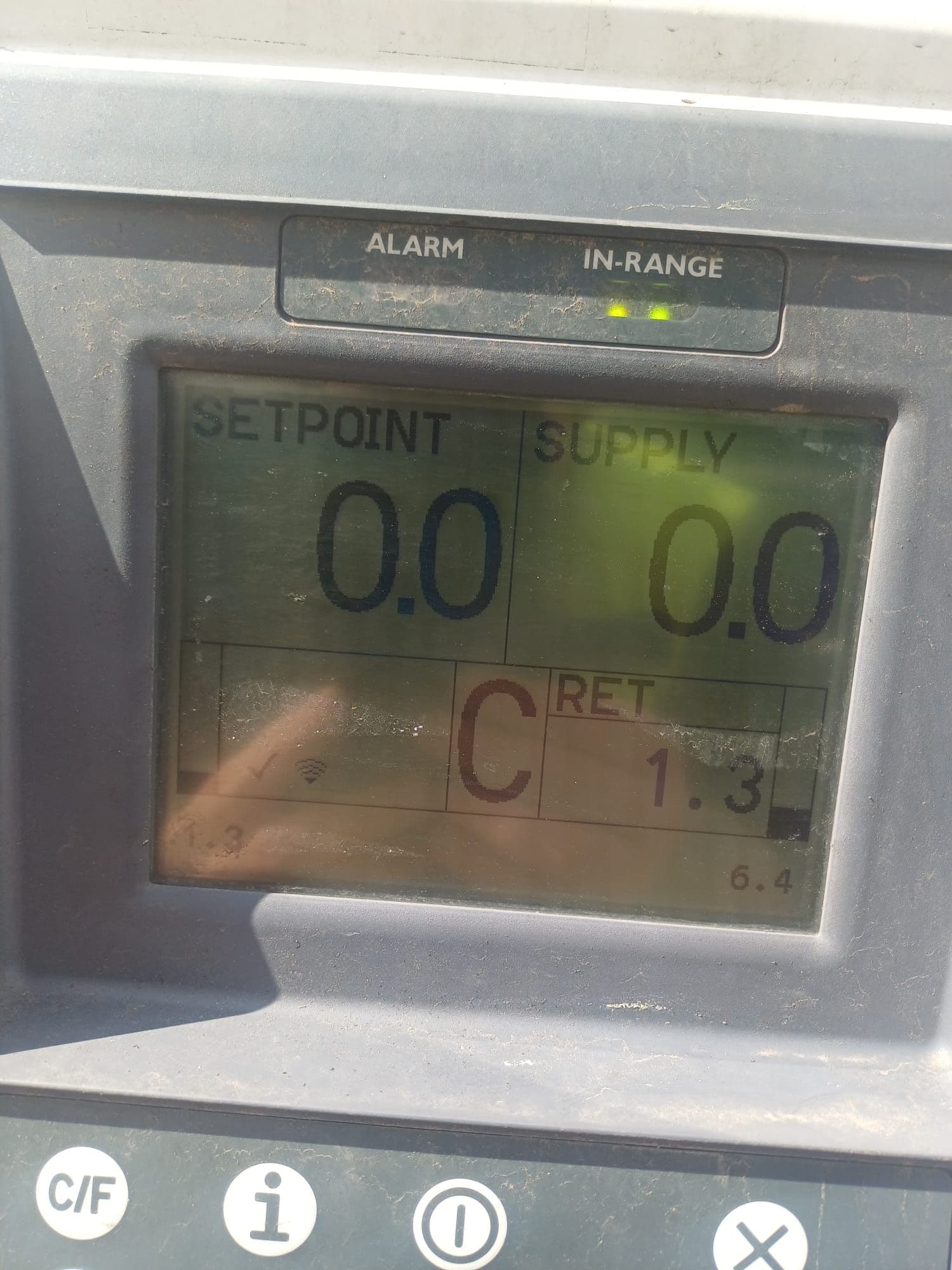
On the controller above, the setpoint reads 0.0°C, with a supply of 0.9°C and a return of 1.3°C. The green in-range light is on: the container is running within the set tolerance.
We run these tractions across Europe, mostly to and from Antwerp. For the organisation, we work with a fixed network of partners who have gensets. We handle the planning and the follow-up, with one dedicated contact for your shipment.
What cargo do we carry refrigerated?
We carry a range of temperature-sensitive cargo in a reefer:
- Food, from fresh produce to frozen goods
- ADR cargo such as batteries that must be transported refrigerated
- Other chilled or temperature-sensitive goods
The combination of dangerous goods and cooling, as with certain batteries, needs extra care. Both requirements then apply at the same time, throughout the trip.
Shipping a full reefer by sea? We arrange it as FCL reefer through our sea freight. Your refrigerated shipment stays in a single chain, from pre-carriage to on board.