Cross trade transport is the movement of goods between two countries without the trip passing through the carrier's own country. A load that runs straight from France to Germany, or from Spain to the Netherlands, with no detour through Belgium. It sounds simple, but arranging it yourself often is not.
What is cross trade transport?
Cross trade is a trip between two countries where your own country, or your carrier's, plays no part. Think of a load from Italy to France, or from northern Germany to southern France. The goods run from A to B, and Belgium never enters the picture.
Hardly anyone searches for the term itself. People look up the route: transport France Germany, or shipping Spain Netherlands. The need is there; the word for it is not.
Within the EU this is perfectly allowed. International road transport is open here, so a carrier may move a load between two other countries. Do note the difference with cabotage: that is domestic transport inside another country, and it is restricted. For a direct trip between two countries, that limit does not apply.
When do you need cross trade?
The question usually comes up when your regular carrier does not run a particular route. He starts from your region, but a trip that lies entirely abroad falls outside his lines. Or you buy goods in one country and deliver them in another, without them ever passing through your own site.
It happens on every axis across Europe, but most often north to south and back. A supplier in southern France, a customer in northern Germany. A load in Spain bound for the Netherlands. The pattern is always the same: the goods have to run direct, and your usual solution falls short.
Why is such a trip harder than a normal one?
At first glance it looks simple. Find a carrier in the country of departure and you are done. In practice it tends to get stuck.
You do not know the firms there. You have no idea what a normal rate is in that country, so you cannot judge a price. And the language makes contact slow and uncertain.
The risk also cuts both ways. You do not know the carrier, but he does not know you either. To him you are an unknown client from abroad, and that is a risk for him too. The result is often a higher rate, or simply no reply to your request.
So how do you handle cross trade?
That is why many companies turn to a carrier who already knows the European market. Someone with partners in the various countries knows which firms are reliable, what a fair rate looks like, and how to keep contact running smoothly. That takes the guesswork out.
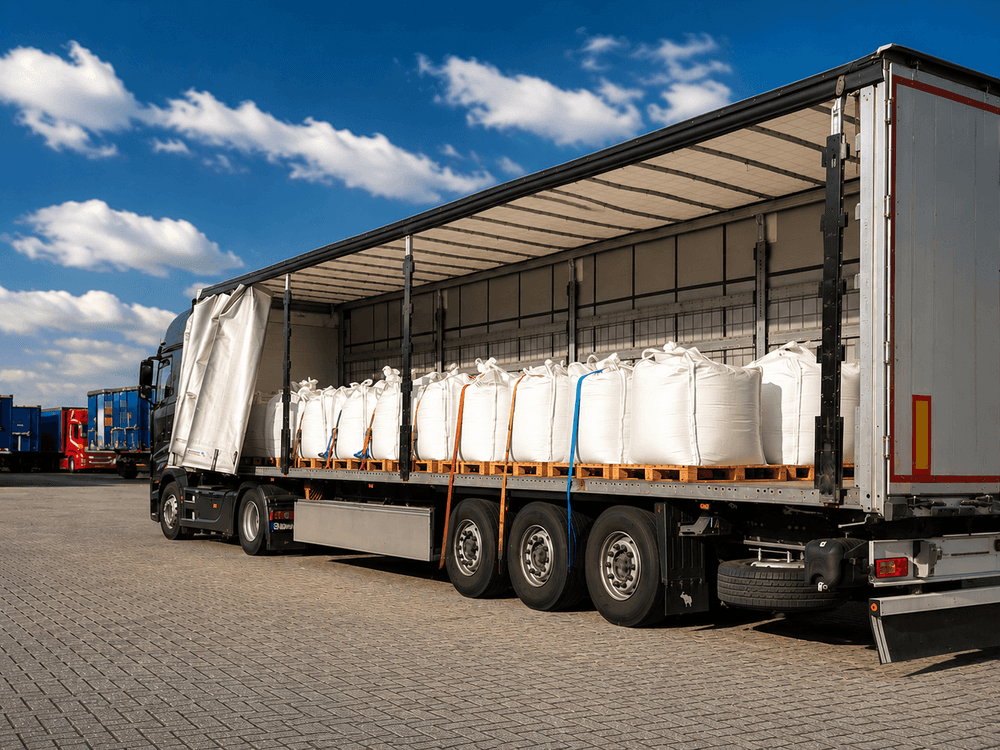
We work that way too. With twenty years of experience and partners across Europe, we run these routes both as fixed flows and as one-off trips. A fixed run might be a weekly load of bigbags on a curtainsider, a form of international road transport that we schedule on a standing basis.
We also handle container transport on a spot basis, for instance a container that has to move from Spain to the Netherlands. Because we know the return flows on those routes, the rate is often lower than if you arranged the trip yourself. But even apart from that, the real gain is that you are not gambling in a market you cannot read.
Got a route like this?
Not sure whether a particular trip is feasible, or just want to sound out how something like this works? Call or email us with no obligation through our contact page. We are glad to think along, even if you are not ready to book yet.